
If you’ve been dealing with leg heaviness by the end of the day, visible varicose veins, or swelling that just won’t quit, you already know how much it can wear you down.
The good news? You don’t need traditional surgery to fix it.
Radiofrequency (RF) ablation is a minimally invasive, non-surgical treatment that closes off the damaged vein causing your symptoms without scalpels, stitches, or a hospital stay.
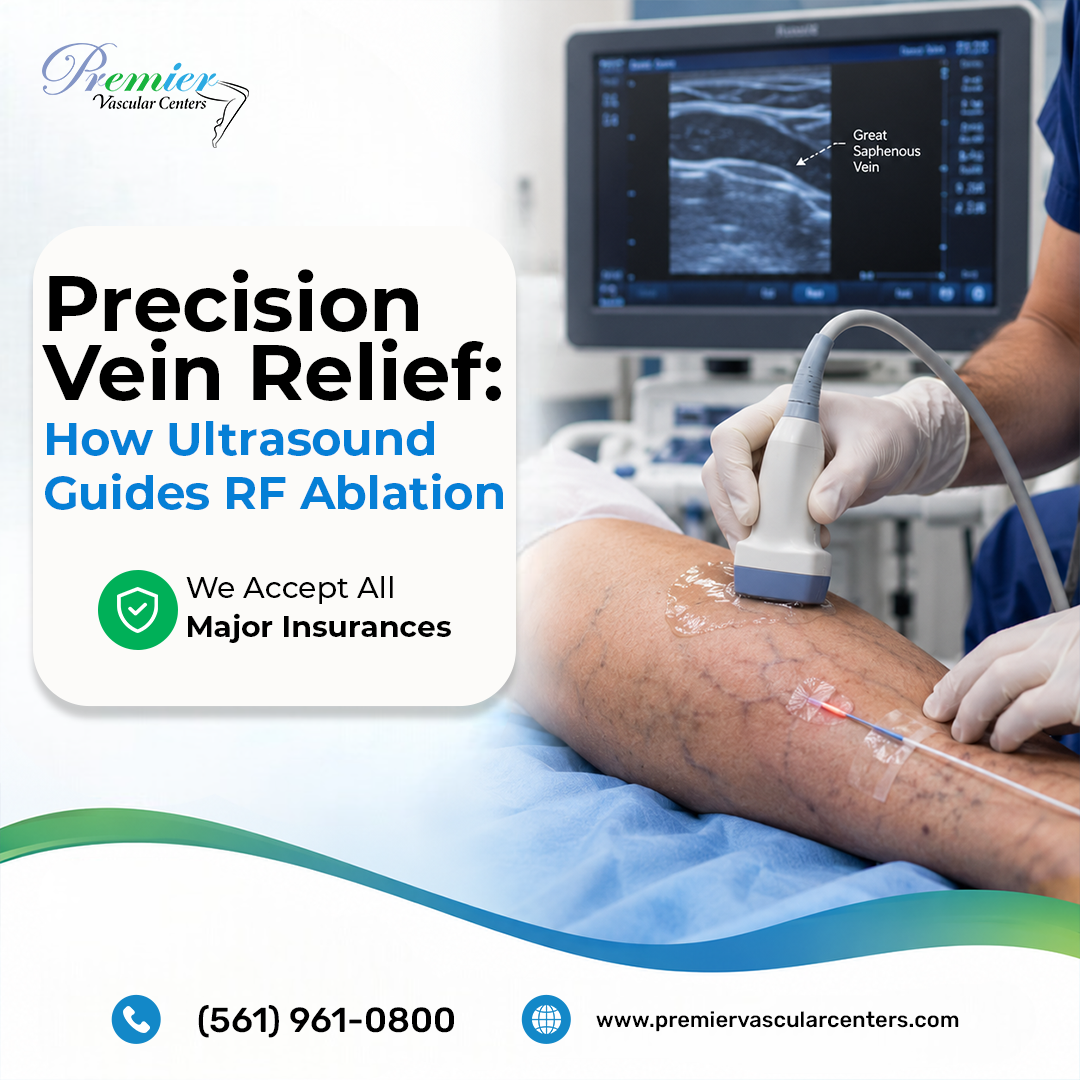
For those searching for vascular experts in Boca Raton, RF ablation has become one of the most trusted paths back to comfortable, symptom-free legs. It works so precisely because of one tool: ultrasound. Think of it as the “eyes” of the entire procedure, guiding every needle, every catheter movement, and every second of treatment in real time.
What Is RF Ablation for Varicose Veins?
How Radiofrequency Heat Closures Work
RF ablation uses targeted thermal energy delivered through a thin catheter inserted directly into the problem vein. Here’s what happens:
• The catheter tip heats the vein wall from the inside
• The heat causes the vein to collapse and seal shut
• Blood automatically reroutes to healthy veins nearby
Once the faulty vein is closed, your circulation improves, and those uncomfortable symptoms start to fade.
Learn about the symptoms that clearly indicate that you may need RF Ablation treatment.
Why Patients Choose RF Over Traditional Surgery
Compared to old-school vein stripping, RF ablation is a different world:
• Minimal downtime: Most patients return to normal activity within a day or two
• Local anesthesia only: No general anesthesia, no hospital admission
• Tiny access point: A small needle stick instead of surgical incisions
Step-By-Step: How Ultrasound Directs Every Stage
Step 1 – Pre-Procedure Vascular Mapping
Before anything touches your leg, ultrasound maps out the vein network beneath your skin. This step identifies exactly which valves are refluxing (letting blood flow backward) and pinpoints the damaged vein segments that need treatment. Nothing is guessed; it’s all mapped in advance.
Step 2 – Live Needle Entry & Catheter Placement
Once the map is set, ultrasound takes over as a live visual guide. It shows the physician exactly where to make the micro-puncture for needle entry, then tracks the catheter in real time as it advances through the vein toward the treatment area. Every millimeter of movement stays visible on screen.
Step 3 – Guided Tumescent Anesthesia Injection
Next comes the numbing fluid. However, this is not injected blindly. Ultrasound guides the precise placement of tumescent anesthesia around the vessel. This does two things at once:
• Delivers complete pain control
• Creates a protective buffer around surrounding tissue and nerves.
Step 4 – Real-Time Vein Closure & Thermal Monitoring
As the RF energy activates, ultrasound continuously monitors the vein’s response. The physician watches the vessel collapse in real time, confirming full closure before the catheter is ever withdrawn.
Key Benefits of Ultrasound-Guided Vascular Health Treatment
Ultrasound guidance isn’t just a technical detail. It’s what makes modern vascular health treatment so much safer and more effective than older methods:
• Pinpoint Accuracy: Treatment is delivered exactly where it’s needed, nowhere else
• Nerve Protection: Surrounding structures stay visible and avoided throughout
• Faster Recovery: Precision means less tissue disruption and quicker healing
• High Success Rates: Real-time confirmation means the vein is verified closed before you leave the table
What to Expect During Your Visit
Walking in for RF ablation is far simpler than most people expect:
1. Check-in and quick ultrasound scan to confirm the treatment plan
2. A focused 30-to-45-minute procedure, start to finish
3. Walking immediately afterward — you’ll be up and moving the same day
4. Simple home recovery steps, like wearing compression stockings and avoiding heavy lifting for a short window
No overnight stay. No lengthy recovery. Just a clear path forward.
Explore the side effects of RF ablation and learn how to navigate them.
Enjoy Modern Relief at Our Boca Raton Center for Vascular Care
Ultrasound doesn’t just support RF ablation. It makes the entire procedure possible to perform with this level of precision and confidence. From mapping your veins before treatment to confirming closure before the catheter comes out, every step is visually guided, monitored, and verified. That’s the difference between guesswork and genuine vascular expertise.
If leg heaviness, swelling, or varicose veins have been holding you back, our team of vascular experts in Boca Raton is ready to help.
Reach out to Premier Vascular Centers today to schedule a diagnostic consultation and find out if ultrasound-guided RF ablation is the right next step for you.